Essays & Recommendations

Essays give colleges a closer look at how you think, what matters to you and what you have learned from your experiences. Recommendations add another perspective from people who have seen you learn and contribute. Both take time, so begin before application deadlines are close.

A student studies with a notebook and laptop in a library.

Understand the writing you need

A personal statement is an essay about you that may go to several colleges. Supplemental essays and short responses answer a particular college’s questions. Make a list of the prompts and word limits in your applications before deciding what to start with.

Common prompt types are:

  • Personal statement. Explore an experience, interest, relationship or idea that helps an admissions officer understand you beyond grades and activities. Common App’s current prompts offer several starting points.
  • “Why this college?” Connect specific opportunities at the college with what you want to learn or do. Explain why a course, program or community interests you instead of listing facts from the website.
  • “Why this major?” Explain what draws you to a subject and how you have explored it. A class, project or question you keep returning to can provide useful evidence.
  • Community or contribution. Describe your involvement in the community and what it has taught you about interacting with others.
  • Short responses. Answer the question directly within the space allowed. A brief answer can still include a specific reason or detail.


Brainstorming for the personal statement

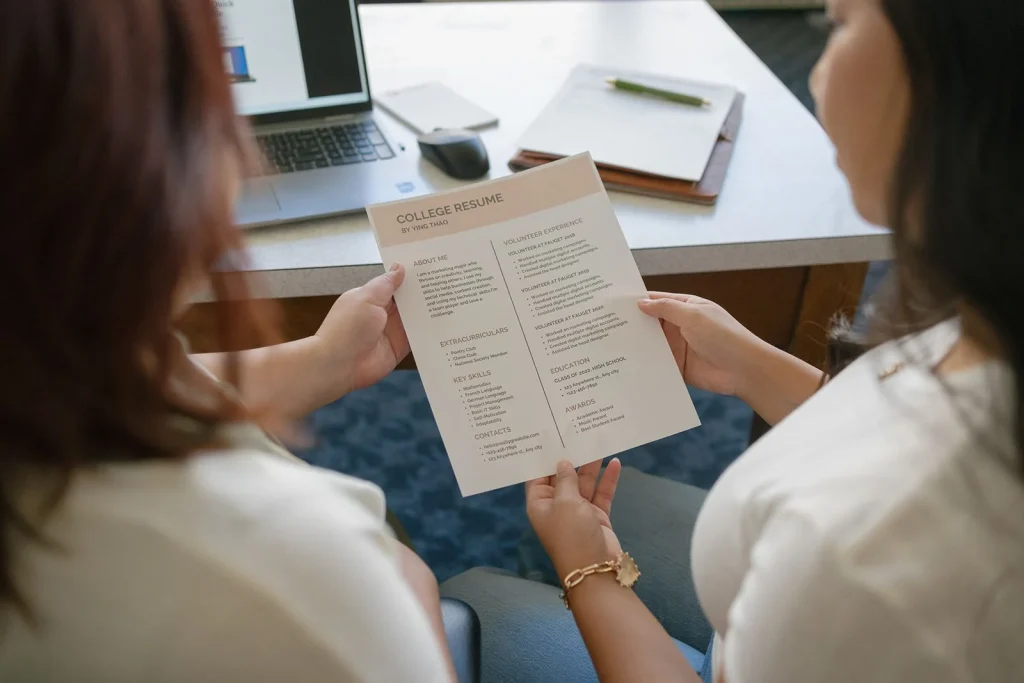
A student studies printed material at home.

Begin by collecting a few moments you remember clearly. Think about a question you pursued, a responsibility you learned to handle, a disagreement that changed your thinking or something you make time for because you enjoy it.

For each possibility, write a few rough notes about what happened, what you did and why it matters to you now. Choose a topic that lets you explain your own thinking. An ordinary experience can work well when you can show something specific about it.

For example, imagine Chou enjoys repairing bicycles. “I like solving problems” gives a reader little to picture. He could instead describe a repair he initially got wrong and how he tested different causes. An essay about how he applied this experience to the future could show his curiosity and how he learns.

Your Hmong identity, family or community may be meaningful subjects if they connect to what you want to say. Choose what you are comfortable sharing; an essay does not require a hardship story or a dramatic turning point.

Choose a structure and draft for your personal statement

A student writes and uses a laptop at her desk.

Two possible structures are narrative and montage, approaches explained in College Essay Guy’s structure guide. They are options, not requirements.

  • Narrative. Follow one experience or connected sequence. Show what happened, how you responded and what you came to understand. The experience can involve curiosity or discovery as well as a challenge.
  • Montage. Connect several shorter moments through a shared idea, such as how you notice details or make things. Each moment should add something new to that idea, so the essay feels connected.

Write a complete first draft before polishing the opening. Include enough detail for someone outside your life to understand the situation, then spend time on your choices and thoughts. If most of the draft describes another person, bring the focus back to what the experience shows about you. Make sure the majority of the essay is about you and your reflection, instead of just what happened.

For a “Why this college?” response, use your college research. Name an opportunity you have verified and explain the question you hope to study or the work you would like to do through it.

Revise your essays

A student and a teacher review a written document.

Set the draft aside briefly, then reread it with the prompt beside you. Start with meaning and organization before correcting individual sentences.

  • Does the essay answer every part of the prompt?
  • Which details help a reader understand your thinking? Which repeat information without adding meaning?
  • Can someone unfamiliar with the event follow what happened?
  • Does the ending explain something you understand now, without claiming a lesson you do not actually believe?

One or two trusted readers can help. Ask what they learned about you and where they became confused. You decide how to use their feedback and make the revisions yourself. Read the essay aloud to catch awkward wording, then check spelling, word limits and formatting in the application preview.

Ask for recommendations

A student and a teacher discuss a written document across a classroom desk.

First check whether each college requires letters, how many it accepts and who should write them. A college may specify a teacher in an academic subject, a counselor or another type of recommender. Extra letters are useful only when permitted and when they add a distinct perspective.

Choose teachers who know your work and can describe how you learn, participate or respond to difficulty. The teacher who gave you your highest grade is not automatically the person who knows you best. If a counselor letter is required, follow your school’s request process as well.

Late Grade 11 is a useful time to ask teachers you already know well. Otherwise, ask early in Grade 12. Allow several weeks before the earliest deadline and follow any earlier school request date.

Ask by email or in person, and explain why you would like them to be your recommender. After they agree, provide the information they need.

  • Your college list, deadlines and submission instructions.
  • A short activity list or résumé, if requested.
  • A few reminders of work they saw, such as a project, class contribution or improvement.
  • Interests or goals that would help them understand your plans.

Keep these materials concise and complete any questionnaire your school uses. The recommender writes and submits the letter. If it remains outstanding near the deadline, send a polite reminder. Thank them after submission and share your college plans once you decide.